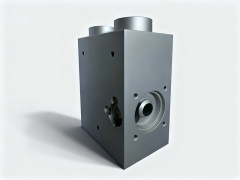
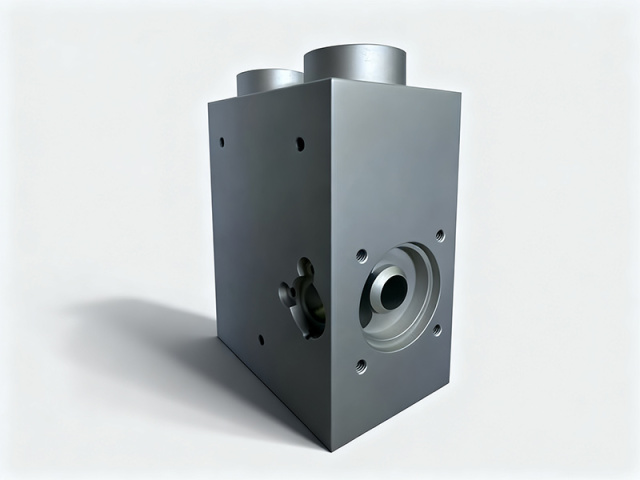

The air compressor intake valve control module is the machined aluminium part that regulates how air reaches the intake valve on a compressor and on pneumatic equipment built on the same principle. It comes out of our custom aluminum fabrication process in aluminium 6063 or aluminium 7075, is cut on 3-axis machining centers, and is then finished so the internal passages stay clean and the seating faces stay true.
The module is made to your drawing rather than to a stock pattern. Bore size, port position, hole pattern, thread callouts and surface treatment all come from the interface you specify, which is why one module shape can serve a compressor builder's revised intake layout and a medical device manufacturer's respiratory circuit without either side redesigning the surrounding pipework.
Buyers usually arrive with one of three jobs in mind. Compressor and industrial equipment builders need intake control matched to a non-standard port layout. Medical device manufacturers need repeatable intake flow in respiratory assistance or surgical pneumatic equipment. R&D and prototype teams need a short run to validate an intake design and check seal integrity before tooling is committed.
The part runs through a single sequence under our roof: rough machining, heat treatment matched to the aluminium grade, finish machining of every precision and threaded hole, deburring and polishing, dimensional inspection, then anodizing or nickel plating. Keeping that sequence in one factory means a drawing change is settled in one place instead of being negotiated between several suppliers.
| Specification | Detail |
|---|---|
| Component | Air compressor intake valve control module |
| Material | Aluminium 6063 / Aluminium 7075 |
| Machining equipment | 3-axis machining center (MAZAK, DMG Mori) |
| Finishing equipment | Magnetic polishing machine |
| Surface treatments | Sandblasted clear anodizing, sandblasted black anodizing, hard anodizing, nickel plating |
| Heat treatment | Selected according to the aluminium grade |
| Dimensional inspection | Zeiss 3D metrology, plug gauges, thread gauges |
| Inner-hole inspection | Microscope check for burrs |
| Production basis | Machined to your 2D drawing or 3D model |
| Typical service | Medical and industrial pneumatic intake circuits |
| Design element | What it does in the assembly |
| Machined block body | Bolts flat to the intake face and keeps the valve housing square |
| Flanged central bore | Gives the valve element a defined seat and a clear path for intake air |
| Flanged side port | Holds the feed connection square to the body so the fitting seals flat |
| Twin bosses on top | Machined to a common height so the mating plate sits without rocking |
| Face mounting holes | Positioned from your drawing so the module drops onto existing studs or bolts |
| Modular interfaces | Sized to mate with complementary machined metal components in the same build |
In medical pneumatic equipment, the intake valve control module is rarely a background part. It sits in the air path of respiratory assistance devices, surgical tools and diagnostic instruments where the clinician depends on the device responding the same way every time. A seat that is slightly out of position, or an intake passage that carries a burr, shows up later as inconsistent flow, a leaking seal or a part replaced before its expected service life.
These modules are built on the same discipline as the rest of our medical work. Materials are aluminium 6063 and 7075, matched to the drawing and finished with anodizing or plating that suits how the equipment is cleaned. Machining follows the positions on the drawing, threads are gauged, and the dimensional record is taken before the coating goes on, so a finish is never the reason a fault goes unnoticed.
Because these are cnc aluminum parts that usually disappear inside a device enclosure, the inspection behind them matters as much as the surface on them. Dimensions are measured against your drawing rather than against a shop standard, and the same checks are repeated on repeat orders so a validated design stays validated when the second batch arrives.
The module is also designed to integrate rather than to be worked around. Mounting faces, bosses and the central bore are machined to interface with the complementary machined components already in the device assembly, and the finish options — sandblasted clear or black anodizing, hard anodizing, nickel plating — are chosen with the cleaning and handling the equipment sees in service.
If your medical build carries its own documentation, cleaning or handling requirements, raise them when you send the drawing. Keeping the custom aluminum fabrication of the prototype and of the production run on the same drawing is the simplest way to avoid a surprise between validation and volume.
Suntontop is a precision machining factory based in Shenzhen, China, founded in 2014 and now 300 people strong, with more than ten years of hands-on processing practice. We run a sufficient number of CNC and other processing machines, so capacity can be adjusted flexibly to match order volumes, and every order is produced to your drawings under full-process quality control supported by more than 100 sets of inspection equipment. We support OEM and ODM custom manufacturing for machinery manufacturers and industrial distributors across Europe, the Americas, Southeast Asia and Central Asia, with on-time delivery and responsible after-sales support.
We machine it from aluminium 6063 and aluminium 7075. Both grades are cut on the same 3-axis centers, both accept the sandblasted anodizing, hard anodizing and nickel plating options offered on this module, and both are chosen for the strength-to-weight balance and corrosion resistance that precision machined parts in a pneumatic intake circuit need. Send the grade called out on your drawing and we will machine to it.
Yes. Surface finish and hole pattern are both open to your drawing: sandblasted clear anodizing, sandblasted black anodizing, hard anodizing and nickel plating are all available on this module, and hole patterns, port positions and thread callouts are machined to the layout you supply. Because the part is produced through custom aluminum fabrication from a drawing rather than from a fixed mould, a change to the hole layout is a change to the machining program — send the pattern your assembly needs and we will confirm it before the first cut.
Dimensions are taken on Zeiss 3D metrology equipment and verified with plug gauges for holes and thread gauges for threads, and the inner bores are examined under a microscope for burrs. Measurements are compared against your drawing, and the same checks are repeated on later orders so a second batch is judged exactly the way the first one was. Our cnc machining service keeps the inspection routine with the job instead of leaving it to whoever happens to run the machine that day.
The module is machined to the interface dimensions on your drawing — bore size, port position, hole pattern, thread callouts and seating faces. If you are replacing a part already in service and the drawing is not available, send the original or a measured sketch and we will work from those interfaces instead. Because these are cnc aluminum parts machined to order rather than picked from a shelf, the drawing review before the first cut is the step that decides whether the module drops straight into your assembly.
Both are machined on the same equipment and both take the same anodizing and plating options, so the right choice comes from what the part has to do: how it is mounted, the loads it sees through the pressure cycle, and the environment around the intake. Tell us those conditions along with the drawing and we will confirm which of the two grades fits before machining starts.