
OEM Gear Procurement
Custom High-Precision Non-Standard Gears for OEM Procurement
Suntontop supplies customized high-precision gears for engineering teams that need drawing-based components, controlled material selection, and practical support from prototype review to repeat machining. The service is suited to buyers sourcing precision gear parts for instrumentation, aerospace-related assemblies, healthcare equipment, robotics, and other compact mechanical systems.
For overseas procurement teams comparing metal parts manufacturing options, this gear program combines material flexibility, gear shaping or hobbing, CNC-machined interfaces, and treatment choices such as nitriding, induction hardening, carbonitriding, and annealing for stress relief.
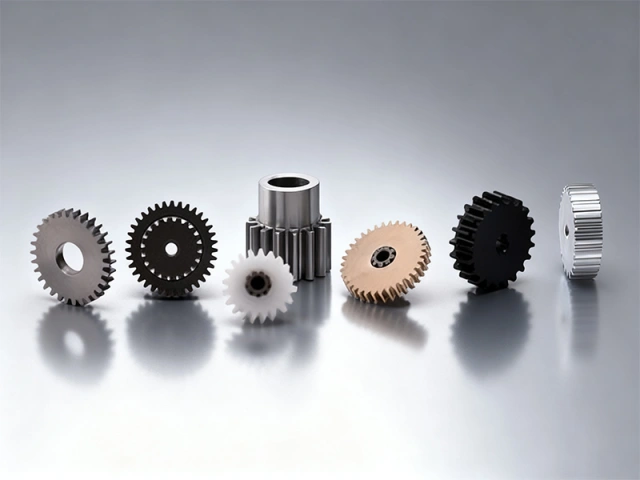
Media, Description, and Product Specifications
Description
This custom gear service supports non-standard transmission components that require controlled tooth geometry, compatible materials, and project-specific treatment planning. Buyers can use the product page image, drawing files, and sample feedback to align gear shape, bore details, mating interfaces, and inspection requirements before repeat procurement.
The project is especially relevant when cnc machining parts must fit into compact assemblies where gear mesh behavior, dimensional repeatability, and surface durability are reviewed together.
Product Specifications
| Product Type | Customized high-precision non-standard gears |
|---|---|
| Tooth Profile Error | Product page states tooth profile error ≤ 1.5 μm |
| Material Options | POM-C, S45C, 40Cr, 40CrMo, SUS304, C5191, C3604 |
| Processing Methods | Gear shaping, gear hobbing, and related CNC machining operations |
| Surface Treatments | Nitriding, induction hardening, carbonitriding |
| Heat Treatment | Annealing to remove internal stress |
| Processing Cycle | 10-25 days, depending on drawing requirements and order complexity |
| Applications | Healthcare equipment, aerospace-related assemblies, instrumentation, automation, and compact mechanical transmission systems |
Core Supply Advantages
Drawing-Based Customization
Gear dimensions, material, treatment, and mating features can be reviewed against buyer drawings instead of relying on catalog-only dimensions.
Process Coverage
Gear shaping, hobbing, and CNC machining support tooth geometry and adjacent precision features within the same procurement discussion.
Treatment Planning
Surface hardening and stress-relief options help buyers match wear resistance, dimensional stability, and assembly requirements before production.
Related Technical Articles
Custom Machine Parts for Enhanced Instrumentation Accuracy
This article explains how precision machining, tooth profile control, and material selection support stable instrumentation performance across demanding operating conditions.
Read ArticleAdvantages of Choosing a CNC Machining Parts Supplier for Complex Gears
The article reviews quality control, material range, and supplier evaluation factors for complex gears where tolerance control and machining experience matter.
Read ArticleOverview of Available Custom Machined Parts and Their Industry Uses
This overview covers material choices such as S45C, 40CrMo, and SUS304, plus surface treatment options for aerospace, healthcare, and instrumentation parts.
Read ArticleVerified Procurement Feedback
Senior Mechanical Engineer, Germany
Our team needed non-standard gears for a compact instrument drive. Suntontop's material discussion and machining feedback helped us prepare a cleaner drawing package before sample review.
Procurement Manager, United States
The useful part was the ability to discuss gear hobbing, bore machining, surface treatment, and inspection points in one sourcing conversation. That reduced back-and-forth during supplier comparison.
R&D Sourcing Lead, Singapore
For short-run gear validation, we needed material options and treatment notes before ordering. Suntontop's product information made it easier to align sample expectations with our internal test plan.
FAQ
What information is needed before quoting custom high-precision gears?
A practical inquiry should include gear type, module or DP, tooth count, pressure angle, drawing tolerances, material preference, surface treatment, heat treatment, shaft or bore interface, sample quantity, and expected annual demand. If the drawing is still under review, Suntontop can start with core geometry and application load information, then confirm missing details during engineering communication.
Which materials can be selected for non-standard gear projects?
The product page lists POM-C, S45C, 40Cr, 40CrMo, SUS304, C5191, and C3604. Material selection should match wear conditions, corrosion exposure, friction requirements, strength targets, and the mating parts in the assembly. Engineering buyers should also consider how heat treatment or surface hardening may affect final dimensions.
How does tooth profile error affect procurement decisions?
Tooth profile error influences meshing smoothness, vibration, noise, contact stress, and repeatability in precision assemblies. For sourcing teams, the important step is to define the required inspection method and acceptable tolerance range in the drawing or purchase specification so production and inspection expectations are aligned before batch machining.
What processing methods are used for these custom gears?
The product information references gear shaping machines and gear hobbing machines. These processes are suitable for forming gear teeth in different geometries and production scenarios. CNC machining can also support related features such as bores, shoulders, keyways, mounting faces, and adjacent machined interfaces.
Which surface and heat treatments are available?
Available surface treatment options listed on the product page include nitriding, induction hardening, and carbonitriding. Heat treatment includes annealing to remove internal stress. Buyers should confirm treatment sequence, hardness target, inspection requirement, and whether any finishing operation is required after treatment.
How should buyers evaluate samples before moving to repeat orders?
Sample evaluation should include dimensional inspection, tooth geometry review, material verification, surface condition, assembly fit, gear mesh behavior, and operating feedback under the intended load and speed range. Procurement teams should record any drawing revisions from the sample stage so repeat orders can be controlled with the same acceptance criteria.